

INTERIOR DESIGN & PRESERVATION IN GOA
The Hidden Cost of Interior Design: What a Beautiful Home Actually Costs to Maintain for 15-20 Years
Almost every interior design conversation follows the same pattern. Someone shows a Pinterest board or reference photo, and we talk about materials and finishes.
The questions are almost always about how it looks and what it costs to install. Very rarely does anyone ask what it costs to live with five, ten, or fifteen years later.
That second number is often bigger than people expect.
This isn't an argument against nice finishes. It's a case for making decisions with the full lifecycle cost in front of you, not just the installation quote. Here's what actually gets missed.
The lighting trap: aesthetics now, electricity bill later
This is the one almost everyone eventually notices, usually the hard way.
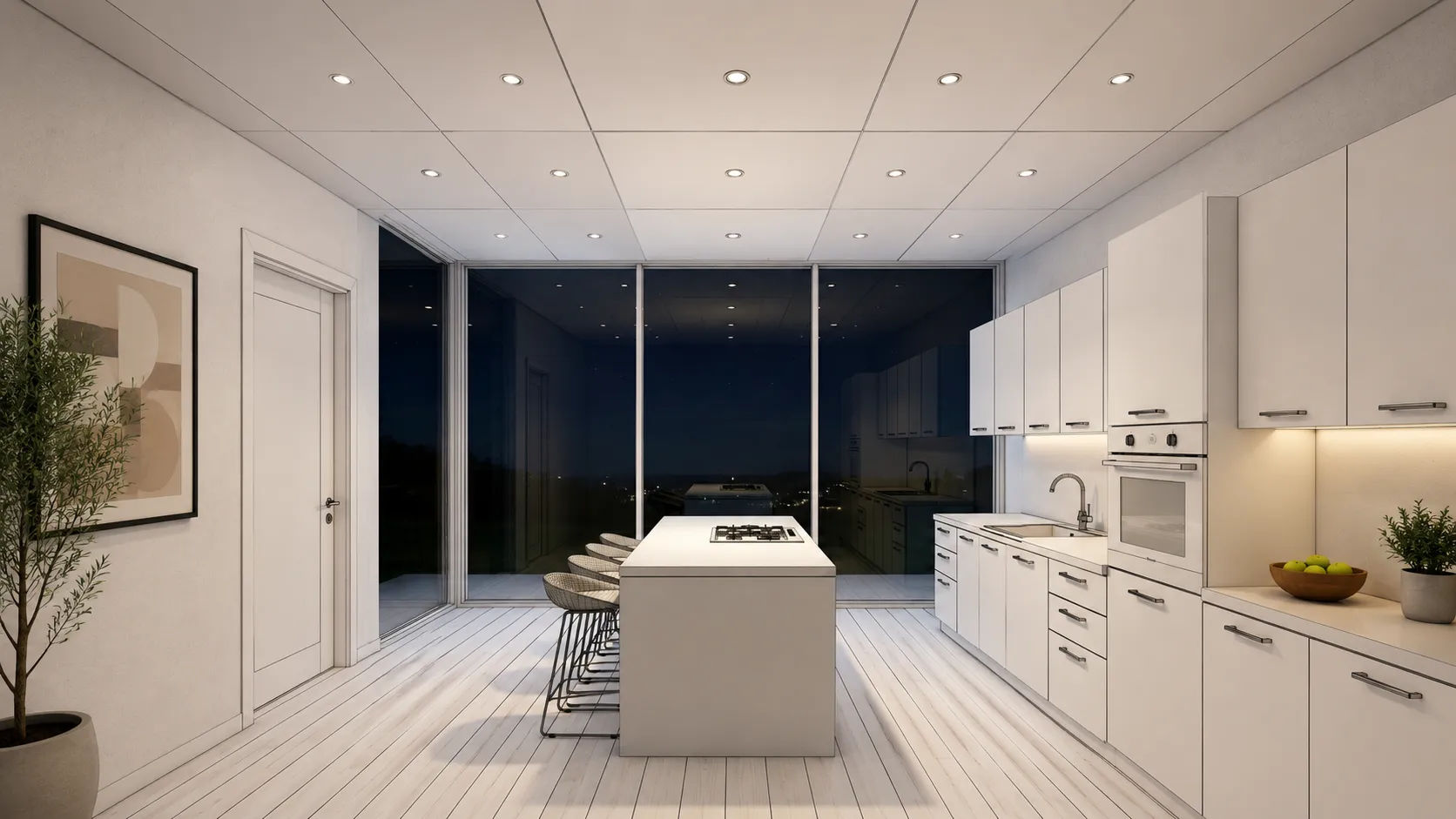
A home gets designed with a dozen small recessed spotlights instead of two or three well-placed fixtures. Layered lighting photographs beautifully and creates a warm, designed feel in a room.
What doesn't get discussed at the design stage: running twelve small fixtures costs more every single month.
The honest pattern we see is that most homeowners quietly stop using half of them within a year or two once the electricity bill registers.
The lights are still there — they just don't get switched on anymore.
This means the money spent installing them didn't buy ongoing value; it bought a one-time impression during design finalization.
The fix isn't necessarily fewer lights — it's asking upfront: which of these are decorative, and am I actually going to run them daily?
A smaller number of well-chosen, well-placed fixtures on dimmers often gives you more real usable flexibility than a dozen you'll stop switching on.
Flooring: the maintenance difference nobody explains at the tile shop
Vitrified tile, natural marble, Italian marble, engineered wood, and natural stone all get presented as roughly interchangeable "flooring options" at the point of sale. They are differentiated mainly by look and price per square foot.
However, their actual maintenance profiles are not remotely similar.
Vitrified tilesare close to maintenance-free—no sealing, stain-resistant, and a simple wet mop keeps them looking new for years. This is why they've become the default choice.
However, they can be extremely slippery when wet, particularly in areas prone to spills like kitchens. For multi-generational households, or family members with mobility concerns, high-gloss slipperiness presents a real safety hazard.
To solve this, homeowners often pivot to anti-skid or highly textured tiles. But this introduces a different maintenance trade-off: textured surfaces are much harder to keep clean.
The texture that prevents slips also traps dirt, spilled liquids, and grease.
In an Indian kitchen with vaporized oils and heavy spices, stubborn grime settles into these textures and requires heavy scrubbing to clean. They must be used strategically rather than laid blindly across the entire space.
Natural marblelooks and feels premium, but it's porous. It needs periodic sealing to resist staining.
In a high-moisture climate like Goa's, un-sealed or under-sealed marble can develop dullness or staining faster than people expect. It also scratches more easily than vitrified tile in high-traffic areas.
Italian marble carries the same maintenance profile as natural marble but at a premium price point. Sourcing an exact colour or vein match for a future repair years later can be genuinely difficult once a batch is sold out.
Engineered or laminate wood flooringlooks warm and modern, but is vulnerable to Goa's humidity swings if not properly acclimatized and sealed during installation.
The honest question to ask before choosing flooring isn't just "what does this cost per square foot."
It's "what does this need me to do every year to keep looking day-one new, and am I actually going to do that."
Modular kitchens: aesthetic finishes vs. long-term functionality traps
High-gloss laminate and acrylic kitchen shutters look sharp in showroom photos.
In daily use, high-gloss finishes show fingerprints, water spots, and fine scratches far more visibly than matte or textured finishes. This requires frequent wiping to keep the kitchen looking presentable.
Visible wear also appears sooner in high-touch areas like handles and cabinet edges. A matte or textured laminate often serves a busy family kitchen much better.
Beyond the finishes, the physical structure of modern modular setups introduces hidden maintenance risks:
The Dampness and Pest Trap:In Goa's humid environment, constructing compact, fully-enclosed cabinets below countertops blocks all natural air circulation.
This traps moisture inside, creating a dark, damp micro-climate. It becomes a perfect breeding ground where cockroaches, silverfish, and rodents can nest out of sight.
The Sagging Door Cycle: Homeowners often save money on hardware to offset expensive wood or laminates. Using cheap cabinet hinges is a short-term saving that backfires within 2-3 years.
Over constant daily use, cheap hinges slip, bend, or rust under heavy laminate shutters, causing cabinet doors to sag and scrape against each other.
The Appliance Growth Trap:Most kitchens are designed strictly around the owner's current appliance footprint. But kitchens grow over a 15-year lifecycle.
Over time, you might buy a microwave, an air fryer, a dishwasher, or need a larger double-door refrigerator.
If the initial layout isn't designed with flexible counter space or structural provisions for appliance upgrades, additions end up piled onto countertops or forced into awkward walkways.
Upholstery and soft furnishings: the fabric decision people don't think through
A fabric sofa in a light colour looks clean and modern at delivery. Most buyers focus solely on whether a fabric is pet-friendly or fits their color palette, leaving maintenance as an afterthought.
However, in Goa's climate—combining high humidity, fine red dust, and salty sea air—soft furnishings require a strict maintenance schedule to stay fresh.
Daily Maintenance vs. Spills: Weekly dust build-up can be managed with modern vacuum cleaners. But the real problem starts when a liquid or food spill occurs.
In Goa's high humidity, an untreated liquid spill doesn't just stain the surface; it seeps deep into the underlying foam core, creating a damp environment that breeds mould and persistent musty smells.
The High Cost of Re-upholstering: Due to heavy wear, staining, and humidity, standard fabric sofas often look worn out within 3–4 years.
What homeowners fail to budget for is the cost of re-upholstering: stripping down a sofa, purchasing high-quality replacement fabric, and paying for transport and specialized labor can cost 60% to 70% of a brand-new sofa.
The Slipcover Solution: To avoid these repeating costs, performance fabrics engineered to resist stains and moisture, or custom-made, removable, and washable fabric slipcovers are far more practical.
Slipcovers can be tossed in the washing machine when dirty and replaced at a fraction of the cost, preserving the structural foam underneath for decades.
Wallpaper: beautiful, but humidity has an opinion
Wallpaper looks striking on Pinterest, but in a tropical climate, it faces a constant battle against moisture.
In high-humidity spaces, the adhesive backing on standard wallpapers eventually weakens, causing seams to lift and corners to peel back.
When this happens, homeowners often try to patch it up by repeatedly applying household glue at the edges.
This backfires: squeezed-out glue reacts with humidity and dust, leaving ugly, dark, discoloured stains and bumpy residue along the seams.
If you want wallpaper in Goa, choosing the right material is crucial. You should avoid cheap paper-backed options, which absorb moisture and harbor mould.
Instead, opt for non-woven or heavy-duty vinyl-faced wallpapers.
These must be installed using premium, water-resistant, anti-fungal adhesives over a wall pre-treated with a damp-seal primer.
Grout lines: the maintenance item almost nobody budgets for
Tile flooring gets chosen carefully, but the grout between tiles is rarely discussed—yet it needs the most attention over time.
Grout stains easily and can develop mould in damp areas.
It requires periodic cleaning or re-sealing to keep tiled surfaces looking new.
Choosing darker grout over white grout is a small installation decision that has massive maintenance consequences five years down the line.
The one almost nobody thinks about: can you actually get someone to fix it later
This is probably the least-discussed cost of all. A finish or fixture is only as good as your ability to get it repaired, re-matched, or maintained years later.
In Goa, some premium finishes (imported tiles, specific veneers, or particular hardware brands) lack local servicing or matching stock.
When something chips or breaks, sourcing materials from outside the state adds unexpected costs and delays.
The Disappearing Tile Pattern Trap: This is a massive issue when doing future renovations or bathroom expansions. Say you want to extend a bathroom or make a layout change 5 years down the line. You will need matching tiles.
However, tile manufacturers constantly rotate catalog designs: specific color tones, patterns, and standard tile dimensions get discontinued and replaced.
If you don't have matching tiles on hand, you face a major aesthetic mismatch or are forced to strip down and re-tile the entire bathroom floor and walls.
The golden rule: always buy a 10% to 15% surplus inventory box (attic stock) of your flooring and wall tiles at the time of initial installation and store them away.
Before committing to a specialist or imported finish, it's worth asking directly: if this needs a repair or partial replacement in eight years, who does that work, and can they actually get the material?
The real question to ask at design stage
None of this is an argument for choosing the cheapest or lowest-maintenance option everywhere in a home — a beautiful kitchen or a striking feature wall is worth some upkeep.
The point is that upkeep should be a known, chosen trade-off, not a surprise that shows up in year two as an electricity bill, a stained grout line, or a light fixture nobody uses anymore.
The questions worth asking about every major interior decision, before it's finalized, are simple:
- What does this cost to run or maintain every month, not just to install once?
- What's the realistic re-touch or repair cycle for this finish, and is that labor easy to find in Goa?
- If this exact material is unavailable in five years, is there a reasonable substitute, or does the whole surface need replacing?
Asking these upfront doesn't mean compromising on design — it means making choices that still look and feel good in year ten, not just in the handover photos.
Planning an interior project and want the maintenance conversation built into the design from day one, not left for you to discover later? Get in touch with our team →— we'll walk through material choices with both the look and the long-term upkeep on the table.