

CEILING OPTIONS & REPAIRS IN GOA
False Ceilings in Goa's Humidity: Why Gypsum Sags and What Actually Holds Up
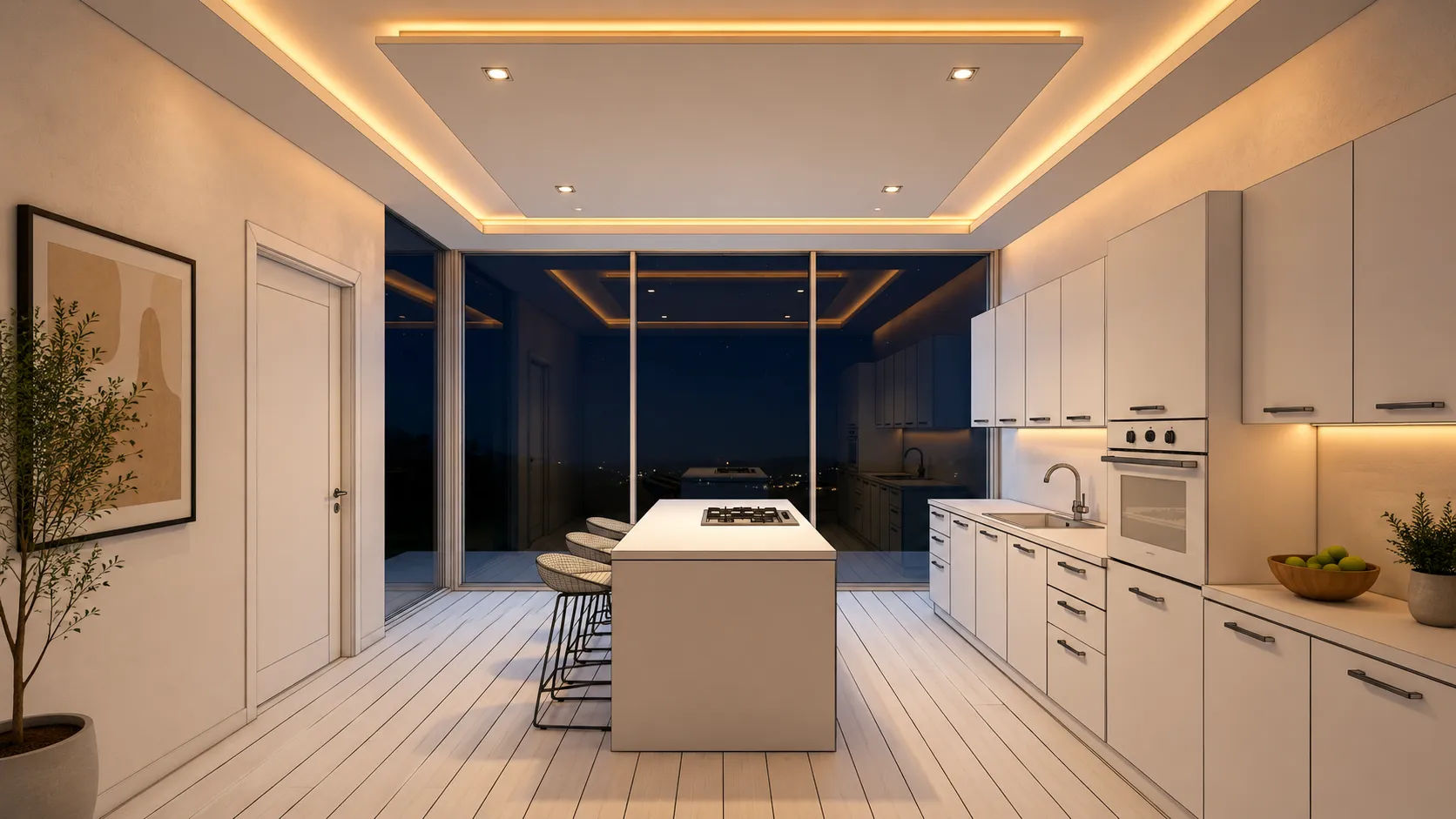
If you've lived in Goa long enough, you've probably seen it: a beautiful gypsum false ceiling, installed maybe two monsoons ago, now sagging at the joints or showing faint yellow-brown water rings near the AC duct. It's one of the most common callbacks we get at Ceiling Squad — and almost always, the ceiling wasn't installed wrong. It was installed for the wrong climate.
Goa isn't like Bangalore or Pune, where a standard gypsum board system from a catalogue works fine. We sit at 70-90% relative humidity for most of the year, get roughly 3,000mm of monsoon rainfall between June and September, and have salt-laden coastal air pushing inland as far as Porvorim and Mapusa. A false ceiling system that isn't chosen with that in mind is on borrowed time.
Why gypsum sags here (the actual mechanism)
Gypsum board is essentially calcium sulfate sandwiched between paper facings. It's a great material — smooth finish, easy to cut for cove lighting, takes paint well — but it's hygroscopic, meaning it absorbs moisture from the air. In a low-humidity climate, that's a non-issue. In Goa, the board is constantly taking on and releasing moisture through every humidity swing, and over repeated monsoon cycles the paper facing weakens at the screw points and the board itself loses rigidity between ceiling channels.
The sagging you see is almost never the whole ceiling failing at once — it's the boards between GI channels bowing downward first, usually starting near bathrooms, kitchens, or wherever a duct or pipe runs above the ceiling and adds a second moisture source from above as well as below.
Three specific triggers we see constantly on Goan sites:
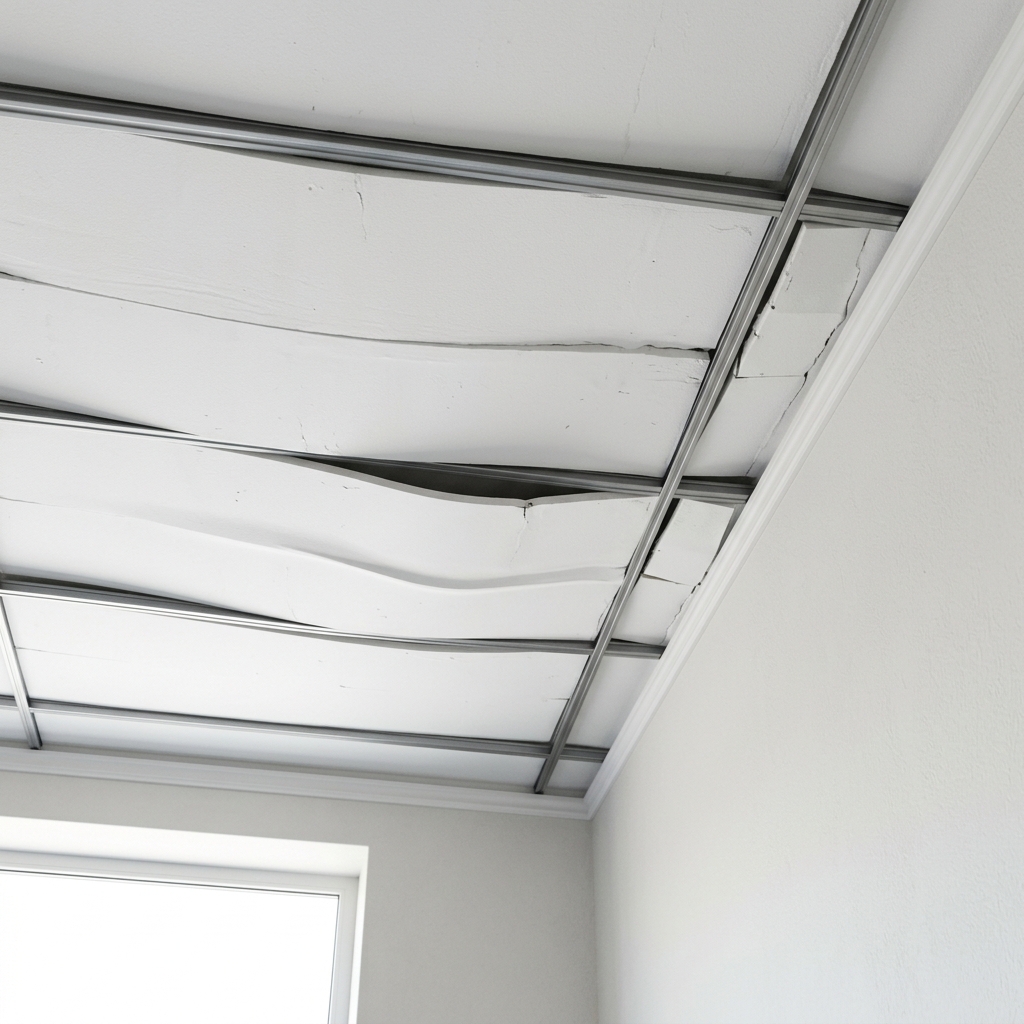
1. Wrong channel spacing for the humidity load
Standard 600mm center spacing is a plains-climate spec. In Goa, we tighten this to 450mm on ceilings prone to higher moisture — bathrooms, kitchens, and rooms with AC ducting — because tighter support reduces the unsupported span that sags first.
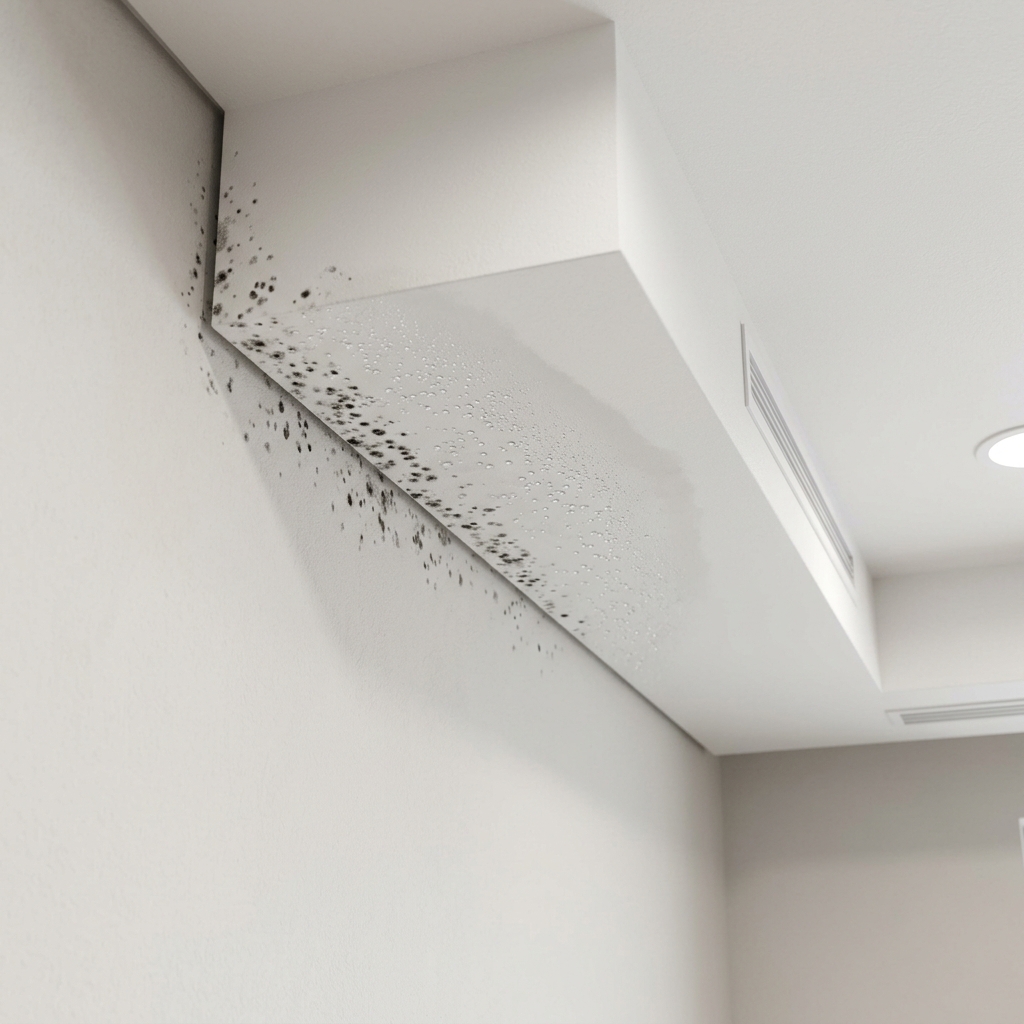
2. No ventilation gap above the board
A false ceiling sealed tight against the slab with zero airflow traps humidity in the void above. That trapped moisture has nowhere to go except into the gypsum board itself. A ventilation gap, even a small one, lets that moisture equalize instead of concentrating.
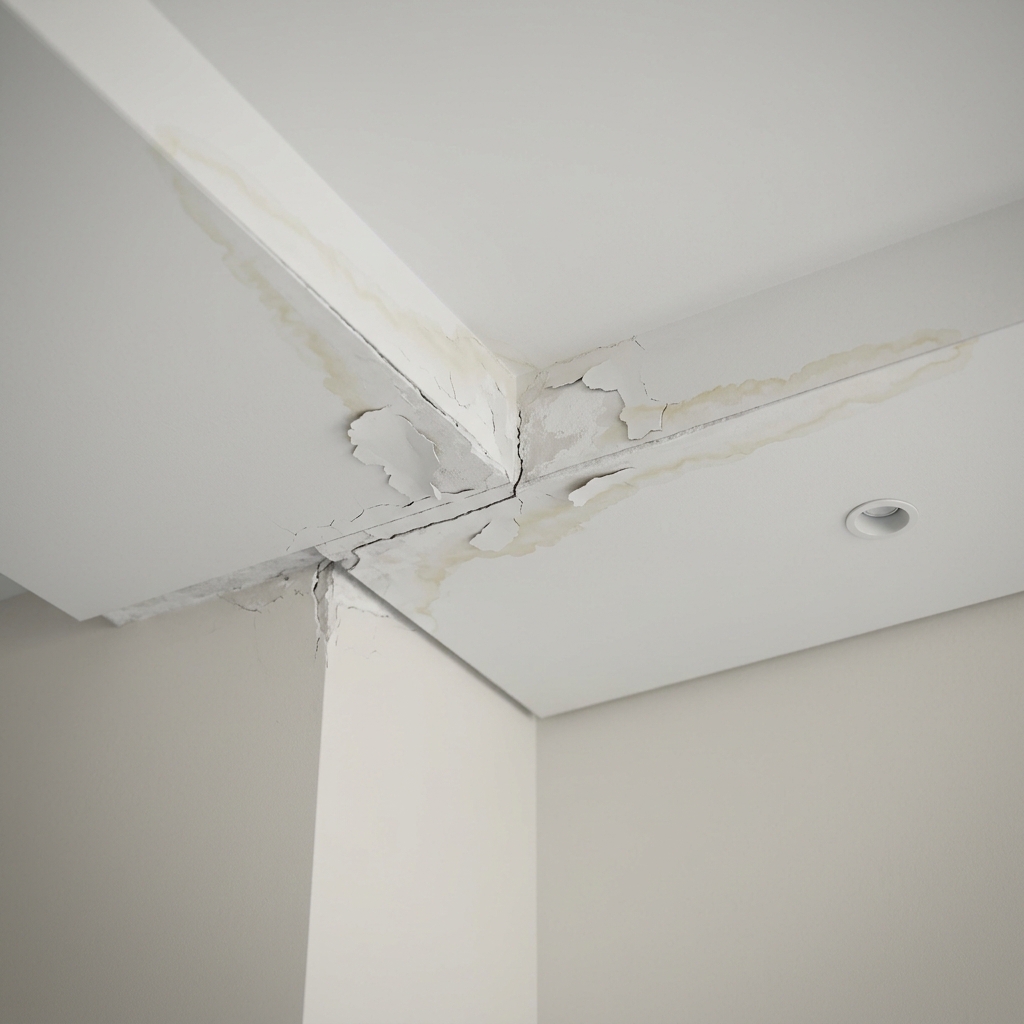
3. Skim coat applied without adequate drying time before monsoon
This is a scheduling issue, not a materials issue — POP finishing coats need proper cure time, and if a ceiling is finished right before the humidity spikes in May-June, it never fully cures before it's fighting monsoon moisture.
Gypsum vs PVC vs Hilux Board vs Grid Panel: what actually suits Goa
We install all four systems depending on the room and budget, but they are not interchangeable. Here's how we actually decide on site.
Gypsum board
Still the best option for living rooms, bedrooms, and any space where you want a smooth, paintable finish or cove lighting detail. It is not wrong for Goa, but it needs to be installed with the tighter channel spacing and ventilation gap mentioned above, and it should be avoided directly above wet areas.
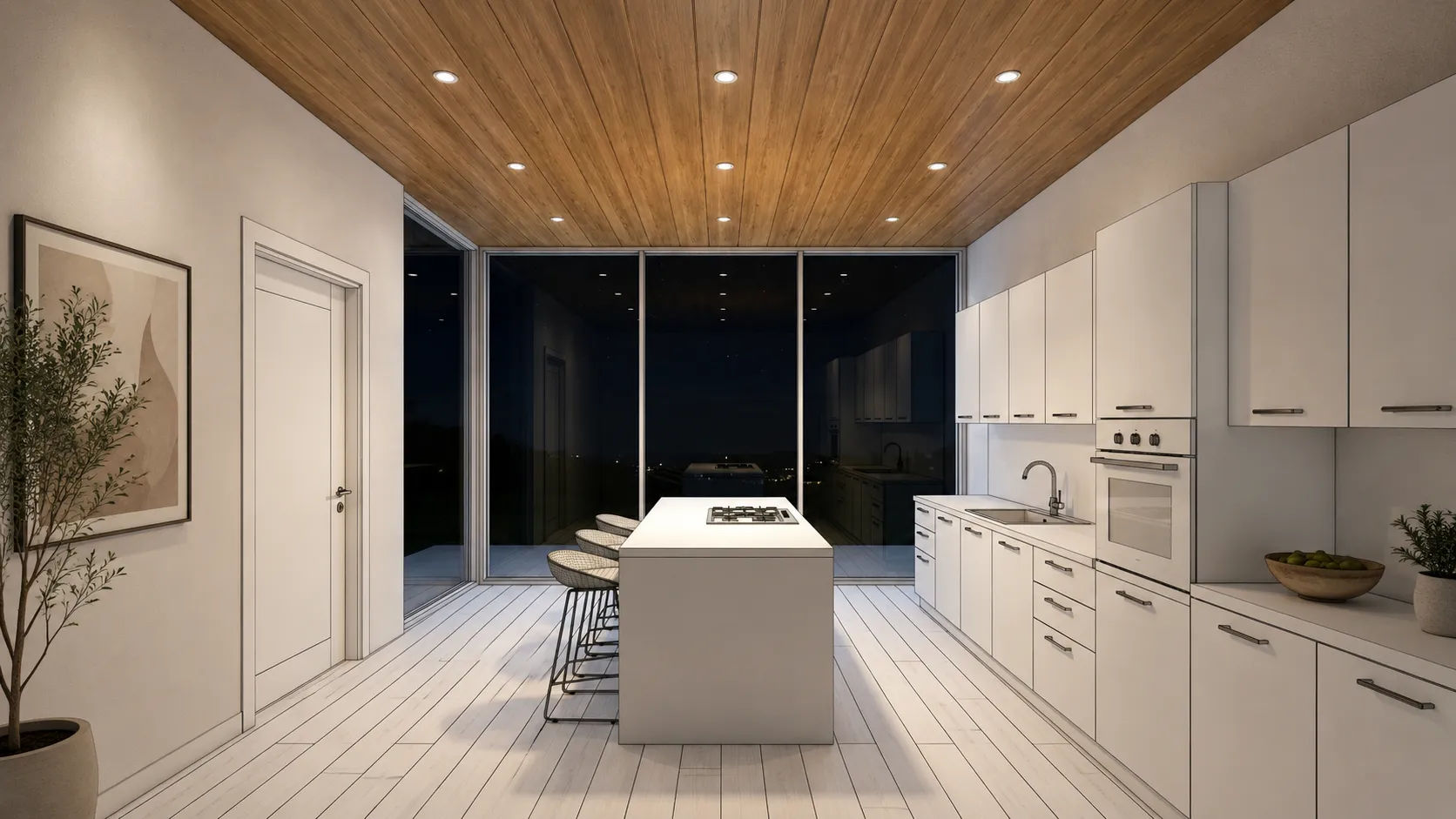
PVC panel
Fully moisture-resistant by nature since it doesn't absorb water the way gypsum does. This is our default recommendation for bathrooms, kitchens, and utility areas, or for budget-conscious clients who want a low-maintenance ceiling without worrying about humidity cycles at all. The trade-off is a slightly more plasticky finish and fewer options for intricate cove or multi-level ceiling designs.
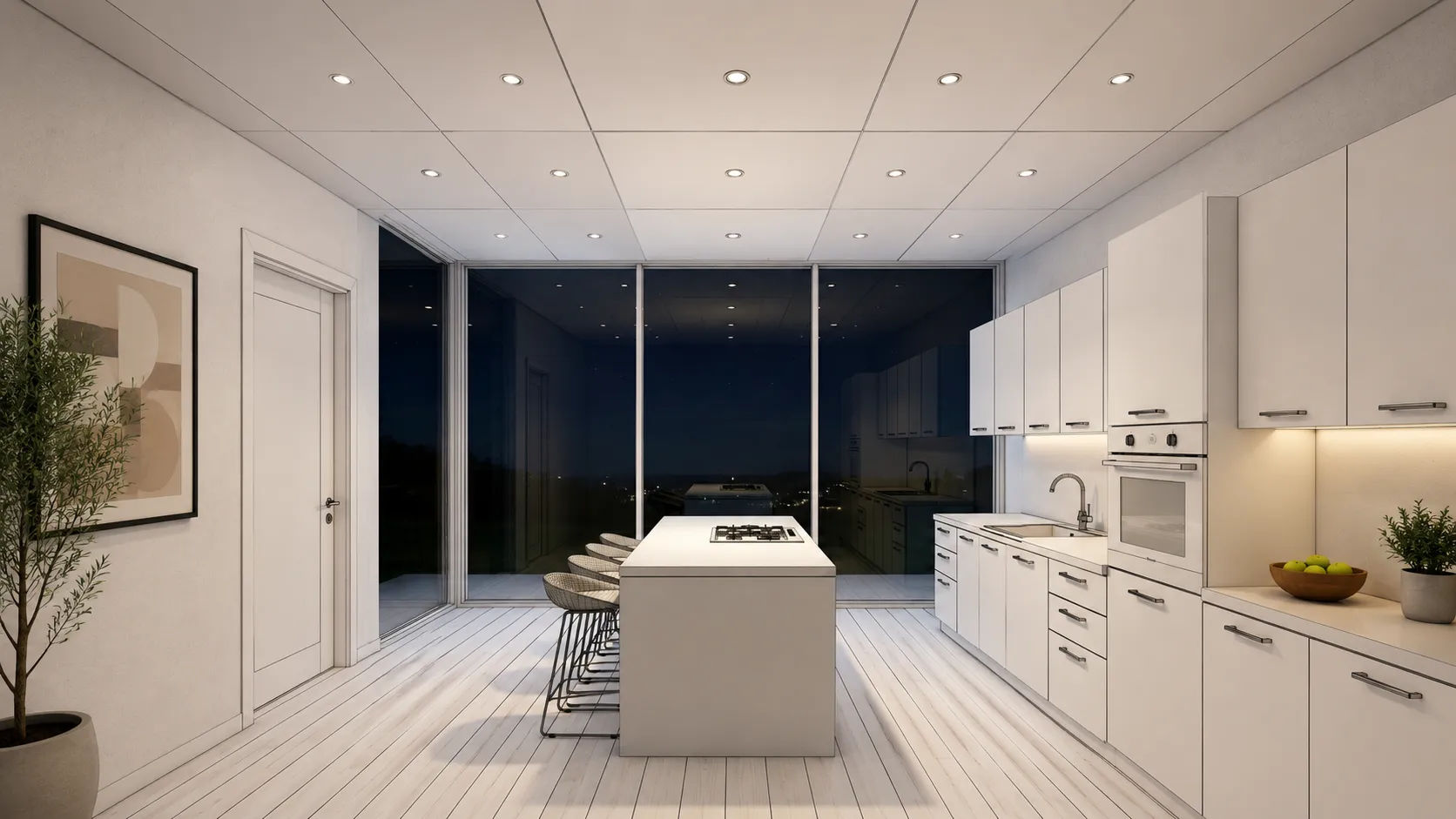
Hilux board
A moisture-resistant board that sits between gypsum and PVC — better water resistance than standard gypsum while still taking paint and finishing closer to a plaster look. We use this often in kitchens where a client still wants a painted finish rather than a visible PVC panel look.
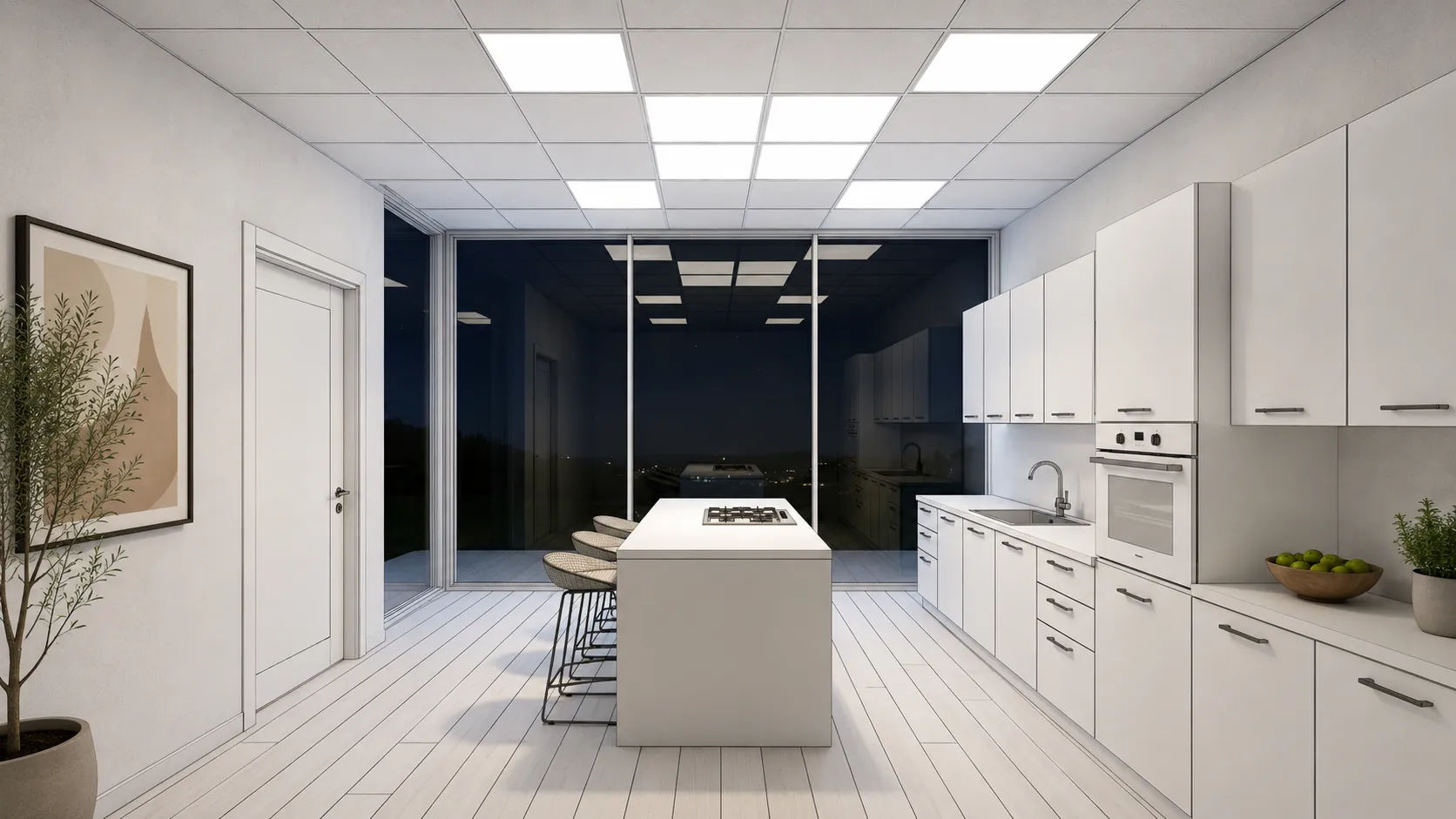
Grid panel (mineral fiber / metal grid)
Common in commercial spaces, shops, and offices rather than homes, since it's fast to install and easy to access for wiring or AC maintenance. Good moisture tolerance, but the exposed grid lines aren't usually what homeowners want for a living room.
The ventilation question nobody asks before installation
The single biggest factor in whether any false ceiling system lasts in Goa isn't the board material — it's whether the room has adequate ventilation and whether the AC system is sized and drained correctly. A false ceiling installed in a sealed, poorly ventilated room with an undersized AC unit will develop condensation problems on the void side regardless of which board you chose. Before any ceiling installation, we check:
- Whether the AC drain line has proper fall and isn't pooling water above the ceiling void
- Whether the room has any natural ventilation or exhaust, particularly bathrooms and kitchens
- Whether the slab above has any existing dampness or seepage that needs treating first — installing a false ceiling over an active leak just hides the problem until it reappears as a stain or sag
What this means for different parts of Goa
- Coastal belt — Candolim, Calangute, Colva, Vasco: Salt air accelerates corrosion on the GI metal framework itself, not just the board. We use galvanized channels rated for coastal exposure and inspect framework corrosion resistance more carefully on these jobs.
- North Goa inland — Porvorim, Mapusa, Assagao: Slightly lower salt exposure but still high ambient humidity, especially in older villas with less cross-ventilation than newer builds. Villa renovations here often need ventilation gaps added retroactively where none existed in the original ceiling design.
- Panjim and older heritage homes: Many Portuguese-era homes have higher ceilings and different roof structures, which changes the void depth and airflow above the false ceiling. These need individual assessment rather than a standard spec.
- South Goa — Margao, Ponda, Quepem: Similar humidity profile to North Goa inland areas, with kitchen and utility area moisture being the more common failure point we see on service calls.
What to ask before you hire anyone for a false ceiling
If you're getting quotes, these three questions will tell you quickly whether the contractor is thinking about Goa's climate or just quoting a standard catalogue job:
- What channel spacing are you using, and does it change for bathrooms/kitchens versus living rooms?
- Is there a ventilation gap planned above the ceiling void?
- What board are you recommending for wet areas, and why?
If the answer to any of these is a shrug, that's worth noting before you sign off.
Planning a false ceiling install or dealing with a sagging existing one? Ceiling Squad handles gypsum, PVC, Hilux, and grid panel systems across all of Goa, from Panjim and Margao to Porvorim and Candolim. Book a free site inspection with our false ceiling contractors in Goa →
For homes in field-adjacent damp belts (Saligao, Assagao, Parra), read our detailed guide on PVC panel ceiling solutions for damp Goa homes. Dealing with roof-level moisture that's affecting your ceiling from above? Read our roof overlay and materials guide.